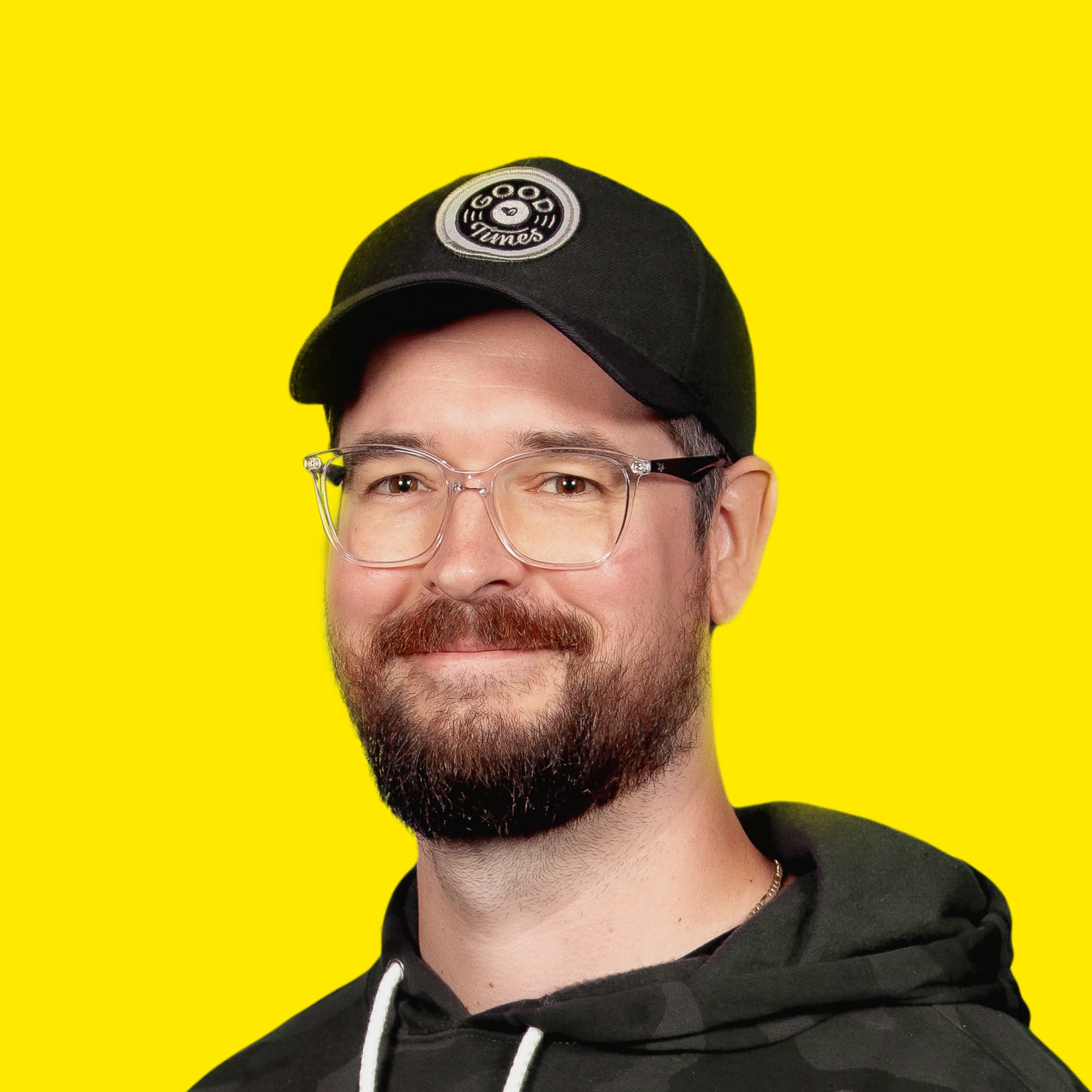
Director’s Cut is our way of showing more of what gets lost between the first conversation and the finished case study: the people, decisions, wrong turns and little breakthroughs that actually shaped the work.
We’re starting a series at Heyo called Director’s Cut. The idea came from a pretty simple problem with the way creative work usually gets shared: by the time anyone sees it, most of the interesting parts are gone.
The portfolio shows the finished brand. The website is polished. The case study has been cleaned up into something easy to follow. You see where the work ended up, but very little of what it took to get there, and that misses a huge part of the story.
A project can change because of one question in a kickoff, or because a developer caught a constraint early enough to save the team from designing around the wrong assumption. A client says something halfway through a call and the problem suddenly gets clearer. A designer looks at a round they spent days on and decides it still isn’t there yet.
None of that is especially glamorous and most of it will never make the case study. It’s also where a lot of the work gets better.
The Finished Work Leaves a Lot Out
Making things is faster now. Our team has more tools available to explore ideas, remove repetitive work, test directions and get things in front of each other quickly. We use them. I’m glad we have them.
Speed is useful. But the part worth protecting is everything speed tempts us to skip. Why this at all. Why this direction. Why something that looked great still got thrown away, and why the team pushed another round when what we had probably could have shipped.
Speed is useful. The part worth protecting is everything speed tempts us to skip.
Those decisions are hard to see when you’re only looking at the finished product. A case study might show a section of a website that feels obvious in hindsight. It doesn’t show the Figma comments underneath it, the versions that missed the mark or the conversation that finally got everyone looking at the problem the same way.
I’ve always been pretty comfortable working in that part of the process. Help the team get unstuck, push when something is close but not there yet, ask the question nobody has answered, make the call when one is needed. Then let the finished work speak for itself.
The problem is the finished work can’t tell you any of that.
There Are People Behind Those Screens
Heyo does a lot of different things. Brand, web, product, illustration, animation, development. It would be easy to talk about those as a collection of capabilities, but that’s not really how the work happens.
It happens when people with very different instincts sit together and try to solve the same problem. Somebody sees something another person missed, somebody pushes back or asks for another day, and every so often somebody has an idea that sounds strange at first and ends up unlocking the direction.
There are disagreements, bad first rounds and ideas that die after we were already attached to them. And plenty of small decisions nobody outside the project will ever notice individually, even though the finished thing would feel different without them.
Those are usually the parts I remember.
I also want the people who did the work to be able to look at the finished project and know where they moved it forward. Their contribution might have been the final design, but it might also have been a question, a critique, a technical constraint or a small adjustment that made the whole project work better.
Good people shouldn’t disappear behind good work.
Clients Are Part of This Too
The client experience gets flattened in a case study just as much as the internal process does. You see the outcome but not the conversations it took to get there.
A good project isn’t one where everyone agrees the entire time. Some of the best work comes out of disagreement, as long as there’s enough trust to challenge something without turning the project into a fight. Clients should be able to tell us when something misses, and we should be able to tell them when a request is pulling the work in the wrong direction. Both sides get to ask questions without treating uncertainty like weakness.
That relationship affects the final work. So does communication, so does clarity, and so does whether everyone understands what the project is actually trying to accomplish before a team spends three days polishing something.
Those things are hard to boil down for a portfolio, but clients are still paying for them.
The deliverable matters. The way we arrive at it matters too.
My Job Isn’t Showing Up at the End to Approve Things
Design Director can sound like a job where someone waits for the work to appear, gives it a thumbs up or down and moves on. A lot of my job happens before there’s anything worth approving.
Sometimes someone needs direct feedback. Other times the first idea is good but buried under too much stuff, or things are moving quickly and nobody has stopped to ask whether we’re actually moving in the right direction.
There are times when I need to make the call, and times when the best thing I can do is ask a question and let the person closest to the work find the answer.
If every good decision has to come through me, I haven’t made the team stronger. I’ve just made myself a bottleneck.
If every good decision has to come through me, I haven’t made the team stronger. I’ve just made myself a bottleneck.
The goal is to give good ideas enough clarity, context and room to survive.
Then get out of the way when they do.
Why Director’s Cut Exists
Director’s Cut gives us a place to talk about the parts that normally get edited out. Not every Slack message needs an audience and nobody needs a documentary about every design review. Plenty of process should stay exactly where it happened.
But some decisions are worth unpacking.
Why we abandoned an early direction. What a client said that changed the brief. Which part of the finished work looks obvious now but took the longest to figure out.
Those tell you more about a creative team than another polished mockup does.
The first episode is about Geomi. We’ll get into the project with the people who were actually there and talk about how the work became what it became.
There will be other projects after that, and the conversations will probably go in different directions depending on the work. That’s the point.
A portfolio can show you what we made. Director’s Cut is our chance to show you the people, decisions, wrong turns and little breakthroughs that made it worth putting in the portfolio in the first place.